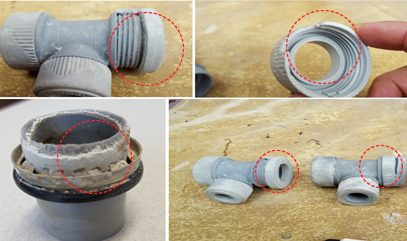

-
Minor Leaks
-
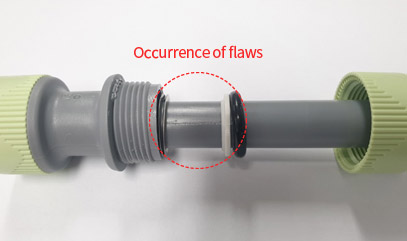
- 01Occurrence of flaws on the pipe surface
-
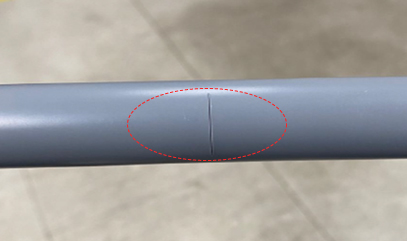
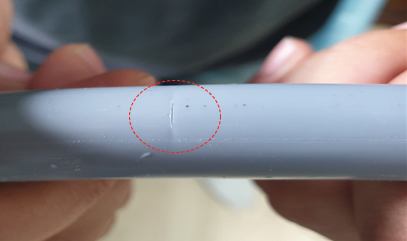
Water leakage due to the occurrence of flaws on the pipe surface (nearby O-ring)
(Minute water leakage occurs with water leakage and stoppage being repeated)
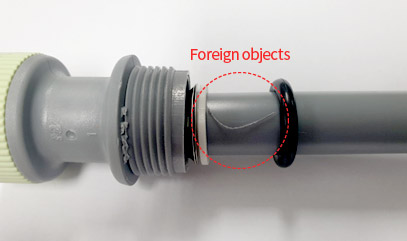
- 02Foreign objects lodged between the O-ring and the pipe.
-
Minor leakage occurs when foreign substances are trapped on the surface of the pipe where the O-ring is contacted (hair, cotton gloves, thread, etc.)
CautionKeep the work area clean and put the fittings in a plastic wrapper instead of storing them in the tool box used in the field.
- 03Leakage due to O-ring and tear
-
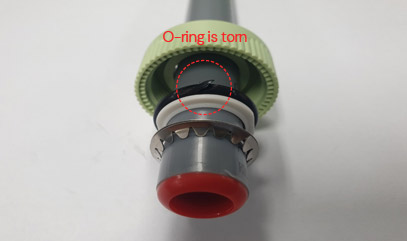
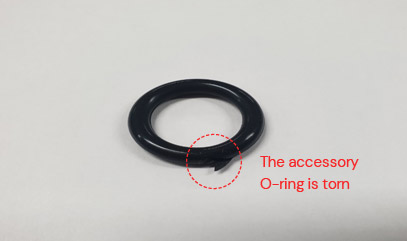
When cutting a pipe using a saw or other tool, the pipe end becomes sharp, damaging the O-ring and leaking.
Be careful not to damage the O-ring, especially during reverse piping. If the end of the copper tube is sharp, the O-ring may be damaged when connecting the copper tube.
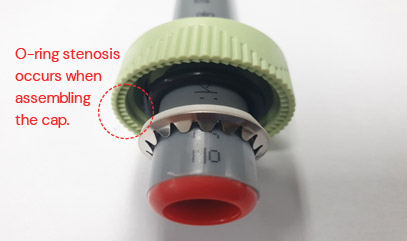
CautionThe O-ring is squeezed between the tip part of the connector and the cap upon reverse piping, which causes tearing
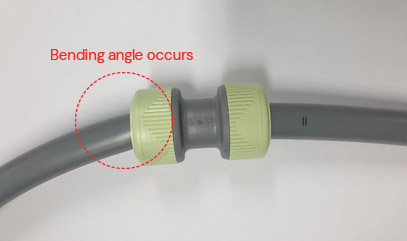
- 04For pipe bending directly at the fittings
-
When a direct bending angle is provided, water leakage may occur from the O-ring
CautionUse proper fittings to maintain straight piping.
-
Pipe Breakout
-
- 01Eccentricity of the grab ring occurs.
-
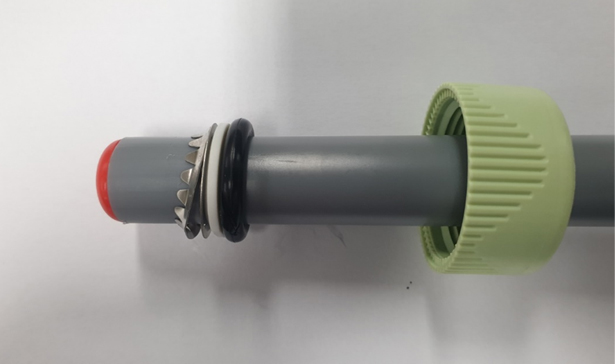
Our grab ring is made of STS 316L material, which has excellent corrosion resistance and high Creep strength.
The grab ring plays an important role in preventing the pipe from coming off after the pipe is installed.
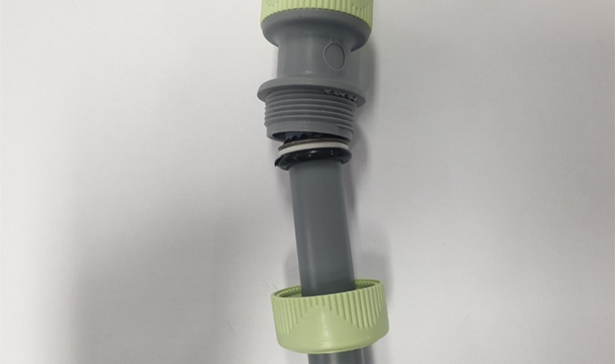
If the grab ring is damaged, it may lead to pipe separation, resulting in leakage. Among the types of defects reported to us, the most frequent phenomenon is pipe separation due to the eccentricity of the grab ring, so please pay special attention to damage to the grab ring at the site.
CautionReusing grap rings, reverse piping, insertion pipes during cap opening can be causes eccentricity above cases.
- What is reverse piping?
-
When it is difficult to work in a narrow space, it means inserting a pipe into the primary fitting, loosening the cap, disassembling it, and then fastening it again or fastening it to another place.
In the case of reverse piping that actually occurs in the field, there are more cases where the cap is loosened and then the pipe is connected again to check whether the second stage of the pipe is inserted. This action is also called reverse piping.
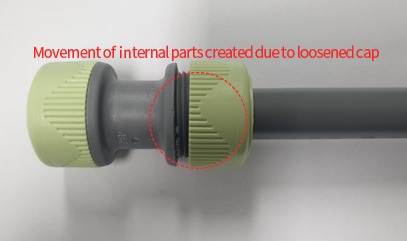
- 02Loosen the cap slightly and insert the pipe
-
When the cap is slightly loosened and the pipe is inserted, the fitting parts are not properly seated and the pipe enters and only one side of the grab ring touches first, causing eccentricity.
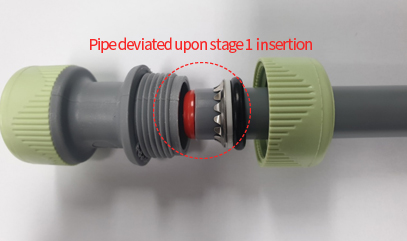
- 03When the 2nd stage is not inserted
-
Our fittings are inserted across two stages. When the first stage is inserted, the O-ring is fully fastened, and when the second stage is inserted, the grab ring is fully fastened.
Since the grab ring does not play a role when the first stage is inserted, the pipe may break out when the water pressure is applied.
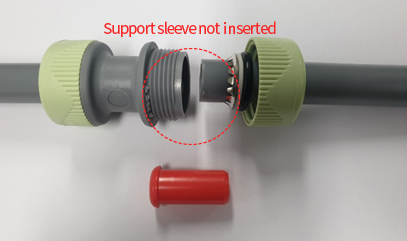
- 04When support sleeve is not inserted
-
If the pipe is fastened without a support sleeve, the pipe must come off later.
-
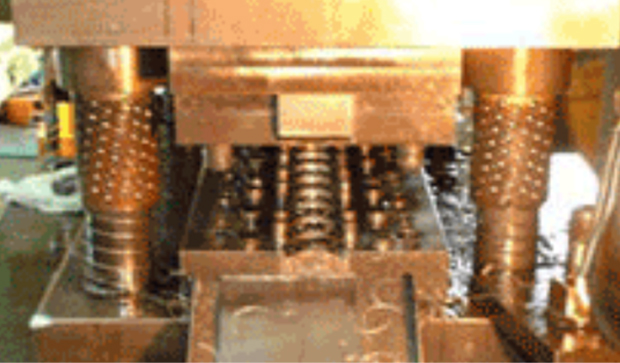
Grap ring press work
-
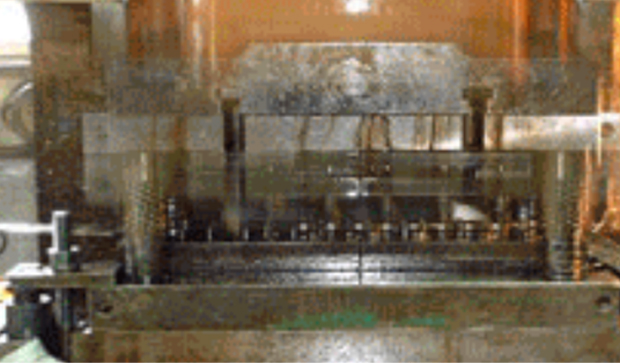
Grap ring cutting work
-
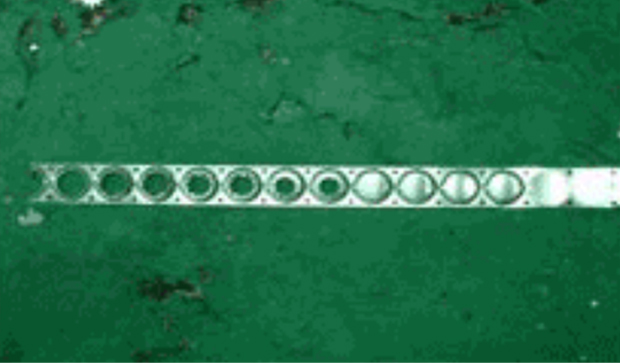
finishing
-
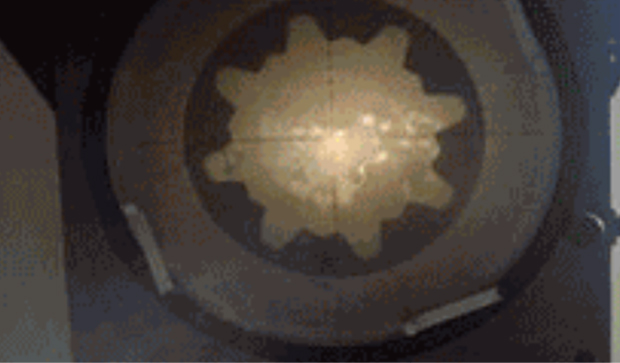
secondary crosslinking
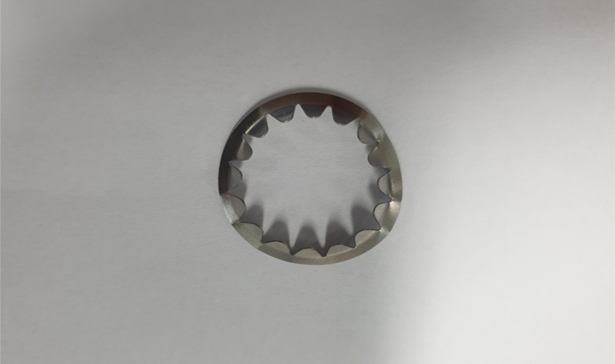
Since grab ring production is a press-working process, it cannot be pressed due to the expansion of the inner diameter and unbalanced teeth. (Eccentricity cannot occur during the production process)

-
Pipe Destruction
-
- 01Pipe destruction by high pressure
-
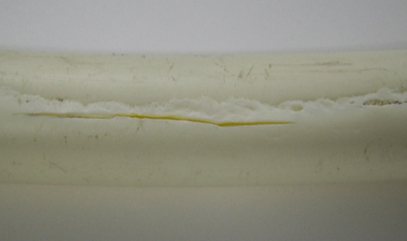
The destruction of the above PB pipe and fittings occurred with a force of at least 40Kgf/cm² and was destroyed by instantaneous high pressure in the water pressure machine for on-site water pressure testing.
CautionBe sure to check and replace the water pressure device on site, and use a pressure gauge of at least 40Kgf/cm².
- 02destruction by external impact
-
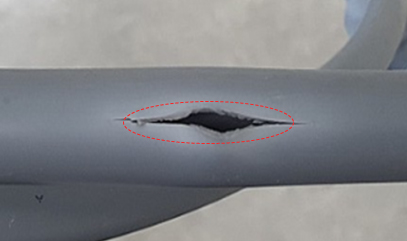
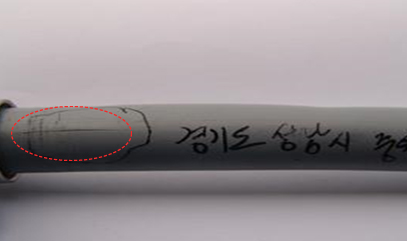
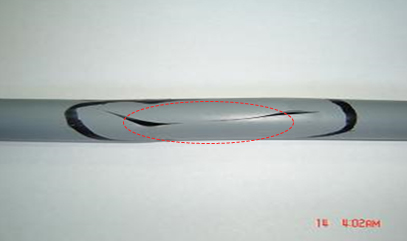
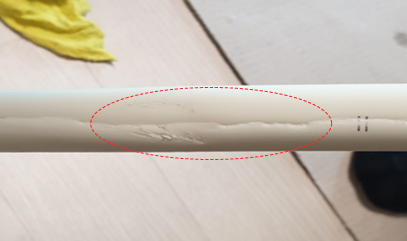
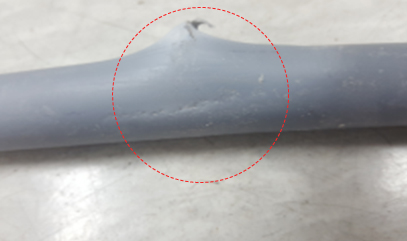
In winter when the external temperature is low, the pipe breaks in the extrusion direction due to an external shock, excessive pressure, or an instantaneous shock under water pressure
(the extent of expansion of the fracture surface may be different depending on the internal pressure)
CautionAt low temperature or under high water pressure, the pipe is vulnerable to impact, so handle it with extreme care.
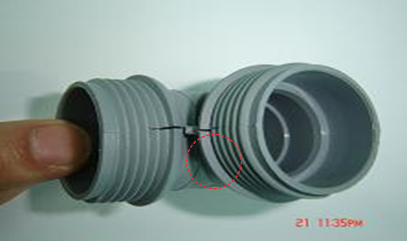
- 03Destruction of pipes and fittings by freezing
-
During winter freeze, the water starts to freeze from one side. Therefore, since the volume expansion of water acts as a large pressure in a specific part, freezing occurs at the point where a specific pressure acts on the PB pipe and fittings.
CautionAt the site, we recommend that you pay special attention to the water wedge work in winter and thoroughly drain the water by household.


-
Eccentricity of grabbing
-
- 01Pipe rupture due to external fire
-
The pipe melts and ruptures due to contact with external fire such as welding sparks or cigarette fire.
When connected to fire, a SUCK phenomenon occurs inside the pipe, and water leakage occurs.
- What is the SUCK phenomenon?
- When the PB pipe melts and becomes soft due to contact with an external fire, it cannot withstand the internal pressure and is destroyed as if it were sucked out.
CautionAs PB pipes are petrochemical products, they are very vulnerable to direct and indirect heat, so pay special attention to contact with fire from other processes.
- 02Pipe rupture due to overheating
-
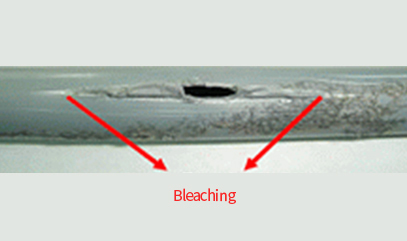
As shown in the figure on the left, whitening occurs due to abnormal overheating of the boiler and instantaneous water heater, and the pipe ruptures.
(Above operating temperature)Pipe rupture due to steam generated during abnormal overheating.
PB pipe softening point: 114℃
- What is bleaching?
- Due to the characteristics of the PB pipe, when the internal temperature of the pipe rises above the allowable temperature and the pipe is destroyed, a phenomenon of turning white around the fractured surface of the pipe occurs.
-
Miscellaneous
-
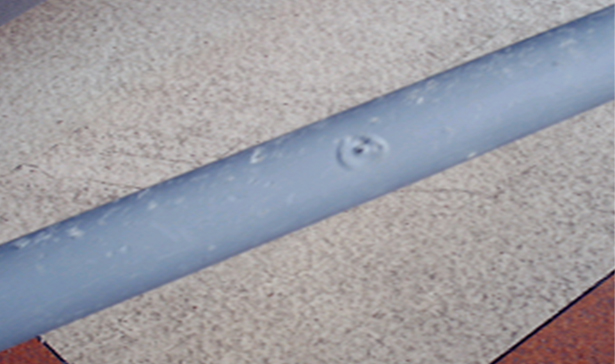
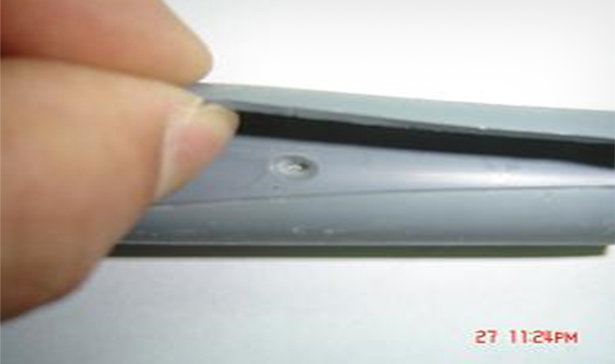
- 01Pipe cracking due to sharp objects.
-
Be careful for damages owing to change cutting position. Mark a right position before pipe cutting.
Using Aikang's pipe cutter certainly for CD pipes cutting
CautionBe sure to check and replace the water pressure device on site, and use a pressure gauge of at least
- 02Pipe cracking due to rust
-
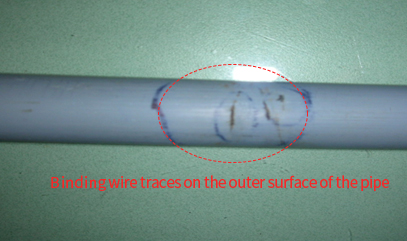
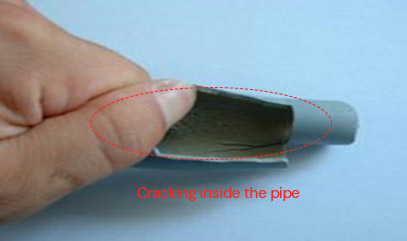
Cracking owing to metal-radical by rust
Radical reactino : Metal ionic oxidation dissolution(oxidative attack)
CautionDo not bind pipes directly.
- 03Pipe hardening by contact with petrochemicals
-
PB pipe is a product of the petrochemical system. Therefore, if there are petrochemical materials near the product,
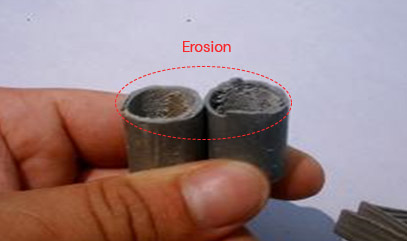
it cause erosion/hardening of the pipe or a volatile smell from the water passing through the pipe.
- What is hardening?
- When PB pipes and fittings come into contact with petrochemical materials, their properties change due to chemical reactions. PB pipes and fittings rupture with erosion (product cracking or crumbling)
CautionBe careful not to contact petrochemical materials near piping before and after construction of PB products!